

How to Layer Peptide, Hyaluronic Acid, and Niacinamide Serums Without Wrecking Your Skin
You've got the serums. The fancy ones. The ones everyone on TikTok swears by. But now you're staring at three little bottles on your bathroom counter wondering... which one goes first? And can you even use them together without your skin staging a full-on revolt?
Deep breath. You're not alone.
Layering a peptide serum, hyaluronic acid serum, and niacinamide serum is totally doable, and when done right, the results are chef's kiss. We're talking plumper, smoother, more radiant skin without the dreaded pilling, irritation, or that "too many products" feeling.
Let's break it down. Simply.
Why These Three Serums Are a Power Trio
Before we get into the how, let's quickly cover the why. Because understanding what each serum actually does makes layering them way less confusing.
Hyaluronic Acid Serum: The Hydration Hero
Think of hyaluronic acid serum as a tall glass of water for your skin. This humectant pulls moisture from the environment and locks it into your skin, leaving you with that dewy, bouncy look we're all chasing.
It's lightweight, plays well with almost every ingredient, and works for pretty much every skin type. Dry skin? It hydrates. Oily skin? It hydrates without adding grease. It's the people-pleaser of serums.
Niacinamide Serum: The Multitasker
Niacinamide serum (vitamin B3) is the overachiever in your lineup. It helps minimise pores, balances oil production, calms redness, and supports your skin barrier. Basically, it does a bit of everything without being dramatic about it.
It's gentle enough for sensitive skin and pairs beautifully with hydrating ingredients. A true team player.
Peptide Serum: The Firming Friend
Peptide serum is where things get interesting. Peptides are amino acid chains that signal your skin to produce more collagen. Translation? Firmer, smoother skin over time.
Peptide serums often have a slightly thicker, more emollient texture compared to water-based serums. They're the closer in your routine, sealing everything in while delivering their own anti-ageing benefits.
The Golden Rule: Thin to Thick
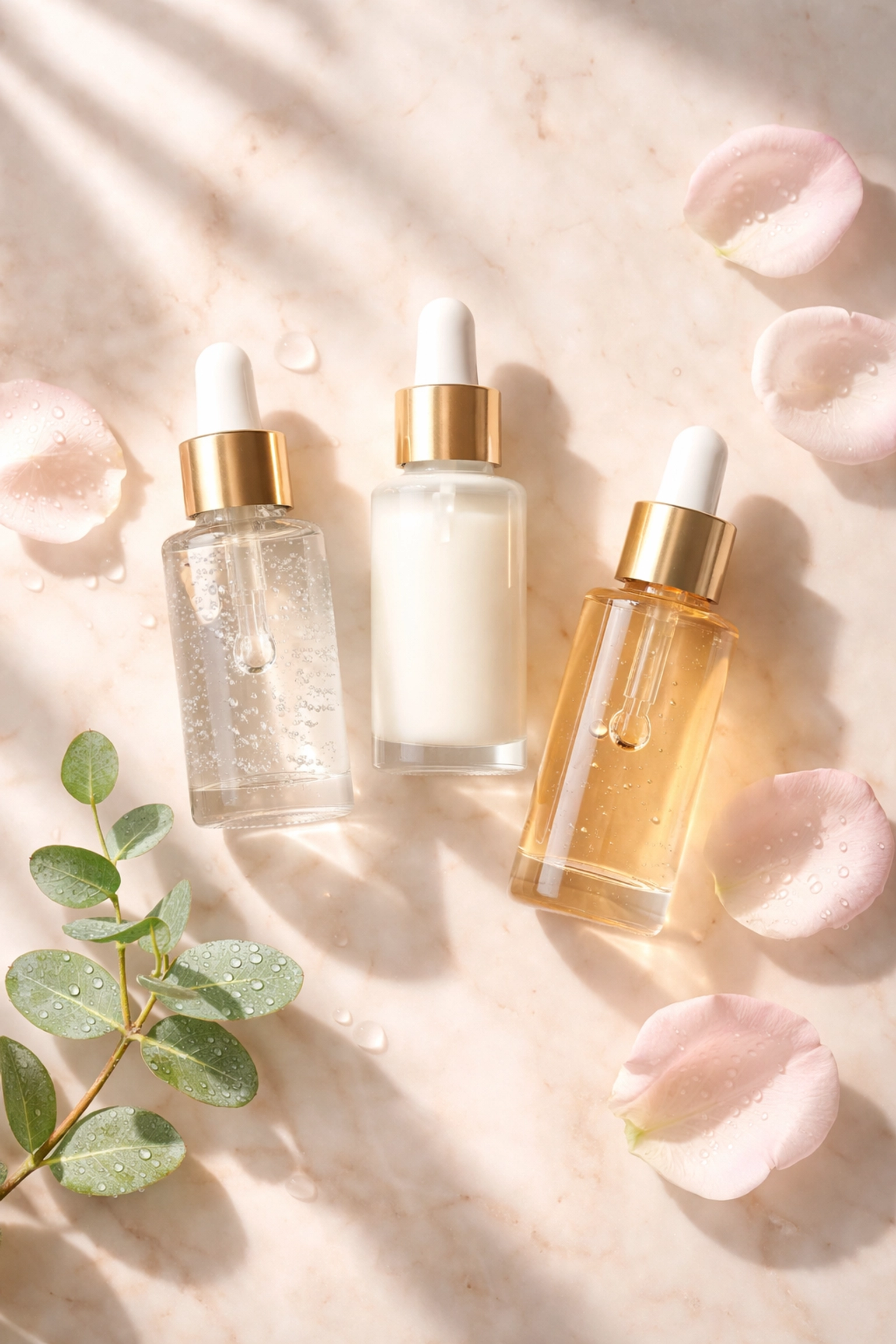
Here's the secret that makes serum layering actually work: apply from thinnest to thickest consistency.
Why? Lighter, water-based serums absorb quickly and deliver active ingredients directly to your skin. If you slap a thick serum on first, it creates a barrier that blocks everything else from penetrating properly.
Think of it like getting dressed. You wouldn't put your jacket on before your shirt, right? Same logic.
Your Step-by-Step Layering Guide
Ready to become a serum-layering pro? Here's exactly how to do it.
Step 1: Cleanse and Prep
Start with a clean canvas. Use a gentle cleanser to remove makeup, sunscreen, and the day's grime. Pat your skin dry, but not completely. Slightly damp skin helps hyaluronic acid work its magic.
Step 2: Apply Hyaluronic Acid Serum First
Your hyaluronic acid serum goes on first. It's typically the thinnest, most water-like formula in the trio.
How to apply: Use 2-3 drops. Press gently into your skin rather than rubbing. Focus on areas that need extra hydration.
Pro tip: Apply while your skin is still slightly damp. Hyaluronic acid attracts moisture, so giving it something to grab onto maximises its hydrating power.
Step 3: Follow With Niacinamide Serum
Next up: niacinamide serum. Most niacinamide formulas are lightweight and water-based, making them perfect for the second layer.
How to apply: Another 2-3 drops. Gently press into skin, focusing on areas with enlarged pores, uneven texture, or redness.
Wait time: Give it 2-3 minutes to absorb before moving on. This prevents pilling and ensures each layer does its job.
Step 4: Finish With Peptide Serum
Your peptide serum goes last in the serum lineup. These formulas tend to be slightly thicker or more emollient, sometimes with a milky appearance.
How to apply: 2-3 drops, pressed gently across your face and neck. Let it sink in for a minute or two.
Applying peptide serum last creates a light seal over your other serums, helping lock everything in while delivering collagen-boosting benefits.
Check out the Uplift Peptide Serum if you're looking for a peptide formula that layers beautifully without feeling heavy.
Step 5: Lock It All In
After your serums have absorbed, follow with your moisturiser. This seals the deal, creating a protective barrier that keeps all those gorgeous actives working.
Morning routine? Don't forget SPF as your final step. Always.
Common Layering Mistakes (And How to Dodge Them)
Even the best serums can let you down if you're making these rookie errors.
Mistake #1: Applying Too Much Product
More isn't always more. Using excessive amounts of each serum leads to pilling, sticky residue, and wasted product. Stick to 2-3 drops per serum. Your skin can only absorb so much.
Mistake #2: Not Waiting Between Layers
Patience pays off. Slapping all three serums on back-to-back doesn't give each formula time to absorb. Wait 2-3 minutes between layers. Yes, it takes a bit longer. Yes, it's worth it.
Mistake #3: Applying in the Wrong Order
Thick before thin = blocked absorption. Always check your serum textures and layer accordingly. When in doubt, the wateriest formula goes first.
Mistake #4: Introducing Everything at Once
New to serums? Don't go from zero to three products overnight. Introduce one serum at a time over a few weeks. This helps you identify what works (and what doesn't) without overwhelming your skin.
How to Know If It's Working
Give your routine at least 4-6 weeks before judging results. Skincare is a marathon, not a sprint.
Signs your layering game is on point:
- Skin feels hydrated without being greasy
- No pilling or product buildup
- Visible improvements in texture, firmness, or radiance over time
- No new breakouts or irritation
If you experience redness, stinging, or unusual breakouts, scale back. Your skin might need a simpler routine, or one of the ingredients might not be your match.
When to Use This Routine: Morning, Night, or Both?
Good news: this trio works for both AM and PM routines.
Morning: Hyaluronic acid adds hydration under makeup. Niacinamide helps control oil throughout the day. Peptides provide a smooth, plump base. Just remember to finish with SPF.
Night: Your skin repairs while you sleep, making it prime time for active ingredients. Layer all three, follow with a nourishing moisturiser, and let the magic happen overnight.
If you're just starting out, try this layering routine once daily (preferably at night) and build up as your skin adjusts.
The Bottom Line
Layering a peptide serum, hyaluronic acid serum, and niacinamide serum isn't complicated once you know the rules. Thin to thick. Wait between layers. Less is more.
These three ingredients complement each other beautifully: hydration, barrier support, and collagen-boosting power all in one routine. No conflicts. No drama.
Ready to build your serum routine? Explore our skincare collection and find formulas designed to layer seamlessly.
Visibly smoother skin. Made simple.


